


Deadline: 16-Jun-2026
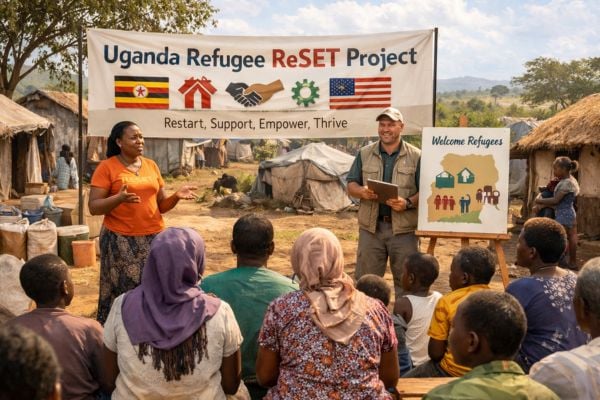
The Foreign, Commonwealth & Development Office (FCDO) is seeking concept notes for the Uganda Refugee Support, Empowerment and Transformation (ReSET) Project, a major initiative designed to strengthen humanitarian assistance, resilience, and self-reliance among refugees and host communities in Uganda. With funding of up to GBP 20 million, the programme supports integrated interventions focused on food security, livelihoods, protection services, climate resilience, gender equality, social inclusion, and sustainable pathways out of long-term humanitarian dependence.
Overview
The Uganda Refugee Support, Empowerment and Transformation (ReSET) Project is a bilateral programme between the United Kingdom and Uganda that aims to transform refugee support from a predominantly humanitarian model into a long-term resilience and self-reliance framework.
The programme seeks to address immediate humanitarian needs while simultaneously creating opportunities for economic empowerment, social inclusion, community resilience, and sustainable development among refugees and host communities.
Approved in March 2026, the programme supports interventions that help vulnerable populations withstand shocks, improve livelihoods, and build long-term resilience.
Funding Details
- Funding organisation: Foreign, Commonwealth & Development Office (FCDO)
- Programme name: Uganda Refugee Support, Empowerment and Transformation (ReSET)
- Total available funding: Up to GBP 20 million
- Individual grant size: Grants exceeding GBP 1 million available
- Project implementation period: August 2026 to March 2029
- Geographic focus: Refugee-hosting areas across Uganda
- Funding approach: Humanitarian assistance combined with resilience and self-reliance programming
Programme Objectives
The programme aims to improve the wellbeing and resilience of refugees and host communities while reducing long-term dependency on humanitarian aid.
Key objectives include:
- Strengthening humanitarian assistance
- Improving food security
- Expanding protection services
- Building economic self-reliance
- Supporting sustainable livelihoods
- Enhancing climate resilience
- Promoting gender equality
- Increasing social inclusion
- Supporting youth empowerment
- Strengthening disability inclusion
- Improving social cohesion
- Advancing localisation approaches
- Supporting environmental sustainability
- Promoting agricultural development
- Building community resilience
- Encouraging evidence-based programming
Key Focus Areas
Projects should address one or more of the following priorities:
- Humanitarian response and emergency assistance
- Refugee resilience and empowerment
- Self-reliance pathways
- Food security and nutrition
- Protection and safeguarding services
- Livelihood development
- Climate adaptation and resilience
- Gender-responsive programming
- Women’s empowerment
- Youth development
- Disability inclusion
- Social cohesion initiatives
- Localisation and community-led approaches
- Environmental sustainability
- Agricultural support
- Community resilience building
- Research and evidence generation
Understanding the ReSET Approach
The ReSET programme promotes a shift from short-term humanitarian assistance to long-term resilience and empowerment.
This approach recognizes that while vulnerable populations continue to require immediate humanitarian support, sustainable solutions are needed to help refugees and host communities achieve greater economic independence and resilience.
The programme combines emergency assistance with long-term development strategies to create lasting positive outcomes.
Support for Vulnerable Populations
Particular emphasis is placed on supporting groups that face heightened vulnerability.
Priority populations include:
- Newly arrived refugees
- Women and girls
- Youth and young adults
- Persons with disabilities
- Economically vulnerable households
- Marginalized community members
- Vulnerable host community populations
Projects should demonstrate how interventions will address the specific needs and challenges faced by these groups.
Humanitarian Assistance and Self-Reliance Pathways
The programme seeks to balance immediate humanitarian support with long-term resilience-building initiatives.
Humanitarian assistance may include:
- Food security interventions
- Protection services
- Essential support services
- Crisis response activities
- Multisectoral humanitarian assistance
Self-reliance pathways may include:
- Livelihood development
- Skills training
- Income-generating opportunities
- Agricultural support
- Financial inclusion initiatives
- Economic empowerment programmes
- Community-based resilience activities
The goal is to help vulnerable households transition away from long-term aid dependency.
Climate Resilience and Environmental Sustainability
Climate-related shocks continue to affect refugee-hosting regions across Uganda.
The programme encourages projects that:
- Strengthen climate adaptation capacity
- Promote sustainable natural resource management
- Support climate-resilient agriculture
- Reduce environmental pressures
- Improve community preparedness for future climate shocks
Environmental sustainability should be integrated throughout project design and implementation.
Localisation and Community Ownership
A key principle of the ReSET programme is localisation.
Projects are encouraged to:
- Strengthen local leadership
- Support refugee-led initiatives
- Build the capacity of local organizations
- Encourage community participation
- Promote locally driven solutions
- Strengthen local systems and institutions
This approach helps ensure sustainability and long-term impact.
Who Is Eligible?
Eligible applicants include:
- International non-governmental organizations (INGOs)
- National non-governmental organizations (NGOs)
- Refugee-led organizations
Applicants must:
- Hold valid registration with the Uganda NGO Bureau
- Demonstrate the capacity to deliver integrated humanitarian and resilience-focused interventions
- Operate in refugee-hosting areas or have relevant implementation experience
- Meet all programme eligibility requirements
Characteristics of Strong Proposals
Competitive proposals are expected to demonstrate:
- Strong humanitarian expertise
- Clear resilience-building strategies
- Evidence-based programme design
- Gender-responsive approaches
- Disability-inclusive programming
- Localisation and partnership models
- Climate resilience integration
- Strong monitoring and learning systems
- Sustainable long-term outcomes
- Alignment with Government of Uganda priorities
How to Apply
Step 1: Review Programme Priorities
Carefully assess the programme objectives and identify how your proposed intervention supports humanitarian assistance, resilience, and self-reliance.
Step 2: Conduct Needs Assessment
Gather evidence on community needs, vulnerabilities, and opportunities within refugee-hosting areas.
Step 3: Design an Integrated Project
Develop a project that combines:
- Humanitarian assistance
- Resilience-building activities
- Livelihood support
- Social inclusion measures
- Community engagement approaches
Step 4: Build Strategic Partnerships
Identify partners that can strengthen implementation, including:
- Local NGOs
- Refugee-led organizations
- Community-based organizations
- Government agencies
- Research institutions
Step 5: Develop the Concept Note
Prepare a concept note that clearly outlines:
- Project objectives
- Target populations
- Implementation strategy
- Expected outcomes
- Monitoring approach
- Budget framework
Step 6: Submit the Application
Submit the concept note according to FCDO requirements and within the specified timeline.
Tips for a Strong Application
- Demonstrate strong understanding of refugee contexts
- Integrate humanitarian and resilience approaches
- Prioritize vulnerable populations
- Include measurable outcomes and indicators
- Strengthen local partnerships and localisation
- Use evidence-based intervention models
- Address climate resilience and sustainability
- Align with national and regional priorities
- Clearly explain pathways to self-reliance
Common Mistakes to Avoid
- Focusing only on short-term humanitarian assistance
- Weak integration of resilience-building activities
- Limited inclusion of women, youth, or persons with disabilities
- Insufficient evidence supporting project design
- Lack of local partnerships
- Weak sustainability planning
- Poor monitoring and evaluation frameworks
- Failure to demonstrate long-term impact
Frequently Asked Questions (FAQ)
What is the ReSET Project?
The Uganda Refugee Support, Empowerment and Transformation (ReSET) Project is an FCDO-funded programme that supports humanitarian assistance, resilience-building, and self-reliance initiatives for refugees and host communities in Uganda.
How much funding is available?
The programme has a total funding allocation of up to GBP 20 million.
What is the project implementation period?
Projects funded through this initiative will run from August 2026 to March 2029.
Who can apply?
International NGOs, national NGOs, and refugee-led organizations registered with the Uganda NGO Bureau are eligible to apply.
What populations are prioritized?
Priority groups include refugees, host communities, women and girls, youth, persons with disabilities, and economically vulnerable households.
What sectors are supported?
Supported sectors include humanitarian assistance, food security, livelihoods, protection services, climate resilience, gender equality, social inclusion, localisation, and community resilience.
What makes a strong proposal?
Strong proposals combine immediate humanitarian support with long-term resilience and self-reliance strategies while demonstrating inclusion, sustainability, and evidence-based design.
Conclusion
The Uganda Refugee Support, Empowerment and Transformation (ReSET) Project represents a significant investment in the future of refugees and host communities across Uganda. By combining humanitarian assistance with long-term resilience-building, livelihood development, climate adaptation, and social inclusion initiatives, the programme seeks to create sustainable pathways toward self-reliance while strengthening community resilience and improving outcomes for vulnerable populations. With funding of up to GBP 20 million available, the initiative offers an important opportunity for qualified organizations to contribute to transformative and lasting impact in Uganda’s refugee-hosting regions.
For more information, visit GOV.UK.