


Deadline: 15-Dec-2025
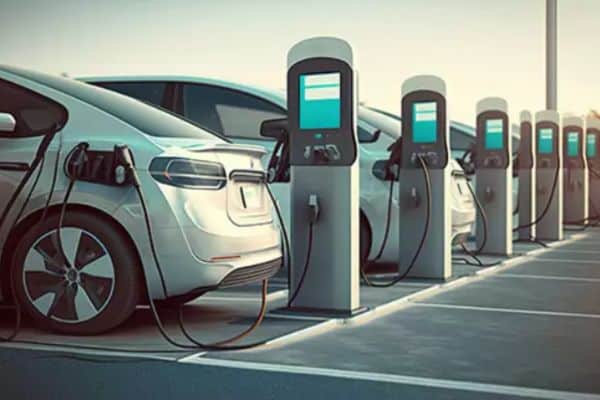
Ontario’s Ministry has launched the EV ChargeON Program to expand public electric vehicle (EV) charging infrastructure across the province. The program offers significant rebates—covering 25% to 75% of eligible costs—to support the installation of Level 2 and Level 3 chargers in communities, businesses, and public spaces. Its goal is to reduce range anxiety, increase coverage, and build a connected, reliable charging network for long-distance EV travel.
EV ChargeON Program: Rebates for Public EV Charging Stations in Ontario
Overview
The EV ChargeON Program is a provincially funded initiative designed to boost the availability of public EV charging stations across Ontario. By funding new installations, the program helps reduce range anxiety, improve regional charging coverage, and encourage more residents and businesses to transition to electric vehicles.
Program Purpose
The initiative aims to expand EV infrastructure through:
-
Increased public charging availability
-
More accessible and affordable EV charging options
-
A stronger, interconnected provincial charging network
-
Improved reliability for long-distance EV travel
-
Reduced barriers to EV adoption
Why It Matters
Ontario’s EV adoption continues to grow, but many communities lack sufficient charging access. A wider charging network supports:
-
Lower transportation emissions
-
Economic opportunities for local businesses
-
Accessible clean transportation options
-
Greater consumer confidence in EV travel
Who Is Eligible?
Eligible applicants must be located and operating in Ontario. Qualifying organizations include:
-
Businesses of all sizes
-
Not-for-profit corporations
-
Municipal governments
-
Indigenous communities, organizations, or businesses
-
Broader public sector institutions (schools, hospitals, etc.)
Small and medium-sized enterprises (SMEs) are strongly encouraged to apply.
Funding Details
Applicants can receive rebates covering 25% to 75% of eligible project expenses.
Key funding rules:
-
Support is provided post-construction
-
The Ministry’s maximum contribution is $1,000,000 per project
-
Applicants may submit multiple applications, even if total funding exceeds $1,000,000
-
Covers EV charging infrastructure and associated installation costs
What the Program Supports
The program funds the installation of public EV charging stations, including:
-
Level 2 chargers
-
Level 3 DC Fast Chargers
-
Required electrical upgrades
-
Construction and installation costs
-
Related infrastructure needed for public access
How the EV ChargeON Program Works
-
Applicant prepares project details
-
Identify site location(s)
-
Determine charger types and required electrical work
-
-
Submit application
-
Include project plan, costs, timelines, and organizational information
-
-
Await approval
-
Applications may be assessed on community impact and project feasibility
-
-
Install EV charging stations
-
Projects must be completed before reimbursement
-
-
Submit documentation for rebate
-
Provide proof of expenses and completed work
-
-
Receive post-construction funding
Common Mistakes to Avoid
-
Failing to demonstrate public accessibility
-
Missing required documentation or cost estimates
-
Overlooking electrical or permitting requirements
-
Submitting unclear or incomplete project plans
-
Underestimating long-term operational costs
Frequently Asked Questions (FAQ)
1. What types of charging stations qualify?
Level 2 and Level 3 public charging stations, including supporting infrastructure, are eligible.
2. Can private businesses apply?
Yes. Businesses of all sizes may apply if the chargers will be publicly accessible.
3. Are Indigenous communities eligible?
Yes. First Nations, Métis, and Inuit communities, organizations, and businesses may apply.
4. Is the funding provided upfront?
No. Funding is delivered as a post-construction rebate once all documentation is submitted.
5. Can one applicant receive more than $1,000,000?
Yes, but only by submitting multiple projects. Individual projects are capped at $1,000,000.
6. Does the program support private home chargers?
No. Only public charging stations qualify.
7. What expenses are covered?
Eligible costs include installation, equipment, electrical upgrades, construction, and project infrastructure.
Conclusion
The EV ChargeON Program is a key initiative for strengthening Ontario’s EV charging network and supporting long-distance electric travel. By offering substantial rebates, the program reduces installation costs for communities, businesses, and public organizations. Expanding accessible public charging infrastructure is essential for encouraging EV adoption and building a cleaner, more resilient transportation future in Ontario.
For more information, visit OVIN.