Deadline: 16-Sep-2026
The BARD Aquaculture and Desert Farming Program invites joint research proposals from Israeli and United States scientists to advance aquaculture, desert farming, food security, and climate-smart agriculture. The programme offers Pioneer Track grants of up to US$600,000 for three-year collaborative research projects conducted through eligible non-profit research institutions.
About the BARD Aquaculture and Desert Farming Program
The BARD Aquaculture and Desert Farming Program supports collaborative research that strengthens scientific innovation in aquaculture and agriculture under desert conditions.
The programme is implemented in partnership with the Israeli Ministry of Agriculture’s Office of the Chief Scientist. Its implementation is subject to formal approval of funding by the relevant Israeli governmental authority.
The initiative encourages long-term scientific collaboration between researchers in Israel and the United States, with the goal of developing sustainable agricultural solutions that improve food production, protect aquatic ecosystems, and address climate-related challenges.
Funding Information
The programme offers:
- Grant Type: Pioneer Track Grant
- Maximum Grant Amount: US$600,000
- Project Duration: 3 years
Funding supports eligible collaborative research and development activities.
Programme Objectives
The programme aims to:
- Improve food security.
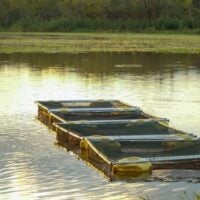
- Advance land-based aquaculture systems.
- Support desert farming innovation.
- Enhance sustainable agricultural production.
- Promote climate-smart agriculture.
- Improve fish diversity and quality.
- Strengthen biological and ecological research.
- Conserve sea and aquatic resources.
- Foster scientific collaboration between Israel and the United States.
Priority Research Areas
Proposals should address one or more of the following research themes:
Aquaculture
Research may focus on:
- Land-based aquaculture systems
- Sustainable aquaculture production
- Fish farming technologies
- Seafood production
- Aquatic biological systems
- Aquatic ecological systems
Desert Farming
Eligible topics include:
- Agricultural production under desert conditions
- Water-efficient farming
- Sustainable farming systems
- Climate-smart agriculture
- Desert agriculture technologies
Food Security
Projects may explore:
- Quality protein production
- Sustainable food production systems
- Agricultural resilience
- Food system innovation
Aquatic Resources
Research may include:
- Fish diversity
- Fish quality
- Algae research
- Conservation of aquatic ecosystems
- Protection of marine resources
- Sustainable management of aquatic environments
Research Scope
The programme supports research and development that:
- Advances land-based aquaculture.
- Improves understanding of biological systems.
- Strengthens ecological research.
- Enhances fish and seafood production.
- Promotes sustainable agricultural practices.
- Supports conservation of aquatic resources in Israel and the United States.
- Develops agricultural solutions for desert environments.
Projects should generate scientific knowledge with practical applications for agriculture and aquaculture.
Who is Eligible?
Applicants must:
- Be affiliated with a public or private non-profit research institution.
- Demonstrate appropriate research and development capability.
- Submit proposals through a legally constituted institution.
Collaboration Requirements
Every proposal must:
- Be jointly developed by one Israeli scientist and one United States scientist.
- Demonstrate meaningful scientific collaboration.
- Include researchers representing eligible institutions in both countries.
Joint international collaboration is a mandatory requirement.
Funding Eligibility Rules
Researchers may apply if:
- They currently hold a BARD Standard Grant and the new proposal qualifies under the Aquaculture and Desert Farming Program.
Applicants are not eligible if they have:
- A current Pioneer Grant ending after 31 December 2026, or
- A NIFA-BARD Aquaculture and Desert Farming Grant ending after 31 December 2026.
How to Apply
Step 1: Establish an International Research Partnership
Identify an eligible research partner from the other participating country.
Each proposal must include:
- One Israeli scientist.
- One United States scientist.
Step 2: Confirm Institutional Eligibility
Ensure that both researchers are affiliated with eligible:
- Public research institutions, or
- Private non-profit research institutions.
Applications must be submitted through legally constituted organisations.
Step 3: Develop the Research Proposal
Prepare a collaborative proposal describing:
- Research objectives.
- Scientific background.
- Methodology.
- Expected outcomes.
- Project timeline.
- Budget.
- Roles and responsibilities of each research partner.
Clearly demonstrate the benefits of international collaboration.
Step 4: Review Funding Eligibility
Confirm that neither investigator is restricted by existing Pioneer or NIFA-BARD funding rules.
Step 5: Submit the Joint Proposal
Submit the proposal through the appropriate institutional and programme application procedures before the official deadline.
Why This Programme Matters
Aquaculture and desert farming are increasingly important for global food production and environmental sustainability.
The programme supports research that can:
- Improve food security.
- Increase sustainable protein production.
- Strengthen climate resilience.
- Protect marine ecosystems.
- Improve agricultural productivity in arid regions.
- Advance scientific knowledge.
- Foster international research collaboration.
The initiative encourages innovative solutions to some of the world’s most pressing agricultural and environmental challenges.
Tips for a Strong Application
Applicants can improve their proposal by:
- Building a strong Israel–United States research partnership.
- Selecting a clearly defined research question.
- Demonstrating scientific innovation.
- Explaining practical applications of the research.
- Presenting a realistic work plan and budget.
- Highlighting environmental and agricultural benefits.
- Showing how the project advances sustainable and climate-smart agriculture.
Common Mistakes to Avoid
Avoid these common application errors:
- Submitting a proposal without both Israeli and U.S. research partners.
- Applying through an ineligible institution.
- Proposing research outside the programme priorities.
- Failing to demonstrate meaningful international collaboration.
- Ignoring existing funding eligibility restrictions.
- Preparing unclear project objectives or unrealistic budgets.
- Submitting incomplete application materials.
Frequently Asked Questions (FAQs)
1. What is the BARD Aquaculture and Desert Farming Program?
It is a joint research funding programme that supports collaborative projects between Israeli and United States scientists working on aquaculture, desert farming, food security, and sustainable agriculture.
2. How much funding is available?
The programme offers Pioneer Track grants of up to US$600,000 for eligible projects.
3. How long can funded projects last?
Projects may be funded for a period of three years.
4. Who can apply?
Eligible applicants are researchers affiliated with public or private non-profit research institutions who submit a joint proposal involving one Israeli scientist and one United States scientist.
5. What research topics are supported?
The programme supports research in aquaculture, desert farming, food security, fish and algae research, biological and ecological systems, aquatic resource conservation, sustainable agriculture, and climate-smart farming.
6. Can researchers with existing BARD grants apply?
Researchers holding a BARD Standard Grant may apply if the new proposal qualifies under this programme. However, investigators with a Pioneer Grant or NIFA-BARD Aquaculture and Desert Farming Grant ending after 31 December 2026 are not eligible to submit a new application.
7. Why is international collaboration required?
The programme is designed to strengthen scientific cooperation between Israel and the United States, combining expertise and resources to address shared agricultural and environmental challenges.
Conclusion
The BARD Aquaculture and Desert Farming Program provides a significant opportunity for Israeli and United States researchers to undertake collaborative research addressing food security, aquaculture innovation, desert agriculture, and sustainable farming systems. With Pioneer Track grants of up to US$600,000 over three years, the programme supports innovative scientific projects that improve agricultural resilience, conserve aquatic resources, and advance climate-smart solutions through international research collaboration.
For more information, visit BARD.