Deadline: 23-Sep-2026
The European Commission is funding projects that use the arts as a driver of innovation, public engagement, and human-centred problem solving. The call promotes “artistic intelligence” as a way to make complex scientific and technological issues more accessible, emotionally engaging, and culturally meaningful.
This opportunity is designed to support interdisciplinary collaboration across art, science, technology, education, policymaking, and industry. Projects must choose either Focus 1 or Focus 2 and develop practical methods, pilots, and evaluation frameworks.
Key facts
-
Programme: Horizon Europe Research and Innovation Action.
-
Total budget: €15 million.
-
Typical project size: €4.5 million to €5 million.
-
Geographic scope: Open to legal entities worldwide, subject to Horizon Europe rules.
-
Consortium requirement: Must include artists and representatives from creative industries.
-
Application condition: Applicants must register in the Participant Register and obtain a Participant Identification Code before grant agreement preparation.
What the call is about
The call explores how arts-based approaches can improve innovation, policy design, education, and societal resilience. It is built on the idea that artistic practice can help people understand complexity, develop soft skills, and design more human-centred solutions.
The Commission wants projects that do more than describe the value of art. It wants tested approaches, measurable results, and methods that can be used by policymakers, educators, researchers, and practitioners.
Core priorities
Arts, science, and technology integration
Projects should strengthen collaboration between artists and scientific or technical communities. This may include shared methods, joint experimentation, public engagement, and new frameworks for evaluating impact.
Soft skills and workforce adaptability
The programme recognizes that creativity, critical thinking, emotional intelligence, and problem-solving are increasingly important in a changing labour market. Arts-based methods may be used to develop those skills across education, public administration, and private-sector settings.
Innovation and societal impact
The call supports artistic intelligence as a tool for ethical AI design, participatory innovation, data storytelling, and broader public understanding of science and technology.
Networks and ecosystems
The Commission wants stronger national, European, and international networks connecting artists with research and innovation communities. Projects should help build durable collaboration structures.
Focus 1
Focus 1 supports the development, testing, and dissemination of arts-based approaches that strengthen soft skills.
Projects may work on:
-
Creativity.
-
Critical thinking.
-
Problem-solving.
-
Emotional intelligence.
-
Adaptability and well-being.
These approaches should be relevant to:
-
Education.
-
Public administration.
-
Private sector environments.
The goal is to improve workforce resilience and performance in response to automation and social complexity.
Focus 2
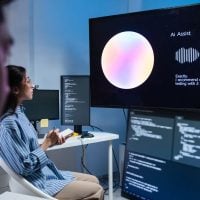
Focus 2 supports at least three small-scale pilot demonstrators involving emerging technologies and interdisciplinary teams that include artists.
Possible technologies include:
-
Immersive media.
-
Spatial computing.
-
Extended reality.
-
Artificial intelligence models.
-
Multisensory systems.
-
Data-driven storytelling.
These pilots should examine how artistic engagement can improve technology development, user experience, and societal impact.
What the programme supports
Projects may focus on use cases such as:
-
Ethical and human-centred AI design.
-
Participatory art–science collaboration.
-
Public engagement through artistic data storytelling.
-
Artist involvement in innovation ecosystems.
-
Artist contributions to policymaking processes.
-
Methods for evaluating medium- and long-term impact.
The call also encourages the development of:
-
Guidance.
-
Toolkits.
-
Methodologies.
-
Evaluation frameworks.
-
Metrics and key performance indicators.
Financial support for third parties
Proposals may provide financial support of up to €60,000 per third party. This is intended to directly engage artists through residencies and experimental collaborations.
This mechanism can help projects bring in creative contributors in a structured way and strengthen the role of artistic practice in the innovation process.
Who is eligible?
Eligible applicants include any legal entity, regardless of country of establishment. This includes:
-
Universities.
-
Research organisations.
-
Cultural institutions.
-
Creative industry actors.
-
Technology developers.
-
International organisations.
-
Organisations from non-associated third countries.
A successful consortium must include:
-
Artists.
-
Representatives from creative industries.
-
Research and innovation partners.
-
Other stakeholders relevant to the chosen focus.
What strong proposals should include
A competitive proposal should show:
-
A clear choice of Focus 1 or Focus 2.
-
Strong interdisciplinary collaboration.
-
A practical use of artistic intelligence.
-
Well-defined pilots, methods, or tools.
-
Clear evaluation criteria and KPIs.
-
Strong relevance to societal challenges.
-
A plan for scaling, dissemination, and network building.
How the call works
-
Choose the focus.
-
Select either Focus 1 on soft skills or Focus 2 on pilot demonstrators.
-
-
Build an interdisciplinary consortium.
-
Include artists, creative industries, researchers, and relevant technical or policy partners.
-
-
Define the problem and use case.
-
Identify the societal or innovation challenge the project will address.
-
-
Design methods and pilots.
-
Develop toolkits, demonstrations, participatory processes, or evaluation frameworks.
-
-
Add measurable impact.
-
Include both qualitative and quantitative indicators.
-
-
Plan engagement and dissemination.
-
Show how findings will reach policymakers, educators, professionals, and wider audiences.
-
-
Submit under Horizon Europe rules.
-
Ensure PIC registration and other participation requirements are completed.
-
Why it matters
This call reflects a broader shift toward innovation that values creativity, emotional intelligence, and human-centred thinking. Artistic intelligence can help bridge the gap between technical complexity and public understanding, making innovation more inclusive and socially relevant.
It also matters because the arts can contribute to better policymaking, better learning, and better technology design. In a time of rapid automation and rising complexity, that kind of cross-disciplinary collaboration is increasingly valuable.
Common mistakes and tips
-
Mistake: Treating the project as an arts-only initiative.
-
Tip: Make sure the proposal clearly connects art with science, technology, or policy.
-
-
Mistake: Choosing both focus areas.
-
Tip: The call requires applicants to select either Focus 1 or Focus 2, not both.
-
-
Mistake: Lacking measurable outcomes.
-
Tip: Include clear KPIs, evaluation methods, and impact measures.
-
-
Mistake: Forgetting to center artists in the consortium.
-
Tip: Artistic practice must remain central, not decorative.
-
-
Mistake: Designing pilots without a dissemination plan.
-
Tip: Show how the results will be shared and reused.
-
FAQ
What is the main goal of this call?
-
To use artistic intelligence to strengthen innovation, societal problem solving, and arts–science–technology collaboration across Europe.
-
It aims to make complex ideas more accessible and human-centred.
How much funding is available?
-
The total budget is €15 million.
-
Typical project funding is about €4.5 million to €5 million.
Who can apply?
-
Any legal entity can apply, including organisations from non-associated third countries and international organisations.
-
Horizon Europe rules still apply.
What are the two focus areas?
-
Focus 1 supports arts-based approaches to soft skills development.
-
Focus 2 supports small-scale pilot demonstrators using emerging technologies and artists.
Are artists required in the consortium?
-
Yes.
-
Consortia must include artists and representatives from creative industries.
Can projects fund external artists?
-
Yes.
-
Up to €60,000 per third party may be provided for residencies and experimental collaborations.
What kinds of outputs are expected?
-
Guidance, toolkits, methodologies, pilots, evaluation frameworks, metrics, and practical collaboration models.
Conclusion
This Horizon Europe opportunity is designed to turn artistic intelligence into a practical force for innovation, learning, and social impact. The strongest proposals will combine arts, science, and technology in ways that are measurable, inclusive, and useful for both policy and practice.
For more information, visit EC.